

Anti-Termite Treatment in Jaipur & Across Rajasthan
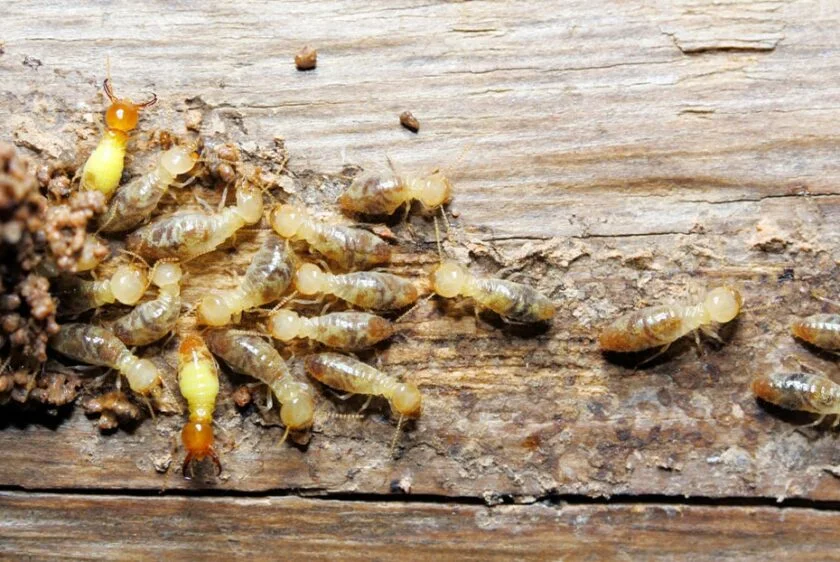
Termites cause more structural damage to Indian property every year than fire and flood combined, and they do it silently. Subterranean termites live in large underground colonies and reach your building through the soil, entering via foundation cracks, expansion joints, plumbing and conduit openings. They then build mud shelter tubes up walls and consume the cellulose inside door frames, skirting, wardrobes, plywood panelling, books and even the paper backing of gypsum board — hollowing timber from the inside while the painted surface still looks intact.
Rajasthan's dry heat does not protect a building; termites simply work below ground and around moisture sources such as bathrooms, planters, garden beds and leaking pipes. NPMS provides both pre-construction anti-termite treatment, applied in stages as the foundation and plinth are built, and post-construction treatment for existing buildings using the drill-fill-seal method along the floor-wall junction combined with soil injection around the external perimeter.
Early Warning Signs of a Termite Infestation
- Narrow mud tubes running up foundation walls, pillars, skirting or the back of wardrobes
- Hollow or papery sound when door frames, skirting boards or wooden panels are tapped
- Discarded wings near windows and light fittings after a swarm, especially post-monsoon
- Bubbling, blistered or cracked paint and small pinholes with soil packed inside
- Warped doors, sagging shelves, damaged books or crumbling wooden beading
Our Anti-Termite Treatment Process
-
1
Structural inspection & activity mapping
We survey the perimeter, plinth, floor junctions, wooden fixtures, bathrooms and service ducts to locate active galleries, entry routes and moisture sources, then prepare a treatment plan with a chemical barrier layout.
-
2
Drill, fill and seal at floor-wall junction
Holes are drilled at fixed intervals along the internal floor-wall junction, termiticide emulsion is injected under pressure to saturate the soil below, and every hole is sealed and finished neatly to match the flooring.
-
3
Perimeter soil and foundation treatment
A continuous chemical barrier is created in the soil around the external walls and foundation so colonies approaching from outside cannot bridge into the structure.
-
4
Timber treatment & warranty documentation
Infested door frames, wardrobes and wooden fixtures are drilled and injected at the joints, and you receive a written warranty with a scheduled inspection plan.
Why NPMS for Termite Control
Termite work is only as good as its coverage — a barrier with gaps is not a barrier. Our technicians follow IS 6313 practice for drill spacing, dosage and emulsion concentration, using CIB&RC-approved termiticides at the correct dilution rather than diluting product to cut cost. NPMS has 30+ years of experience treating residences, heritage properties, hotels, schools, godowns and factories across Rajasthan, and we are ISO 9001:2015 certified and liability insured. Every job includes a written warranty of up to five to ten years depending on the treatment type, with free inspection visits during the warranty period.
Areas We Serve
We deliver termite control and anti-termite treatment in Jaipur, Jodhpur, Udaipur, Ajmer, Kota, Bikaner and across Rajasthan for homes, commercial buildings, warehouses and construction projects.
Frequently Asked Questions about Termite Control
How long does anti-termite treatment last?
A properly executed post-construction treatment is warranted for five years and can be extended with renewals. Pre-construction treatment typically carries a longer warranty of up to ten years.
Will drilling damage my flooring?
Holes are small, drilled precisely along the floor-wall junction, and sealed and finished after injection. In tiled floors they are drilled through grout lines wherever possible to remain almost invisible.
Can I stay at home during termite treatment?
Yes. The chemicals are injected into soil and voids rather than sprayed into living space. Ventilate the treated rooms for a few hours and you can continue normal use.
Is pre-construction treatment really necessary?
Yes — treating the soil during construction is far cheaper and more complete than retrofitting a barrier later, and most structural engineers specify it for this reason.